Quebec's Regulatory Framework and Its Influence on Progressive Jackpot Strategies in Mobile Gaming Environments
Jordan Schmid · Aug 22, 2026

Quebec's Regulatory Framework and Its Influence on Progressive Jackpot Strategies in Mobile Gaming Environments
Quebec maintains a tightly controlled approach to gambling through Loto-Québec which holds the exclusive mandate for operating and licensing all forms of gaming including mobile platforms, and this structure directly shapes how operators design and manage progressive jackpot systems. Progressive jackpots in mobile environments pool contributions from player wagers across networks yet Quebec rules require that any such pools adhere to provincial standards for fairness testing, contribution percentages, and payout verification before integration into licensed apps.
Core Elements of Quebec's Oversight Model
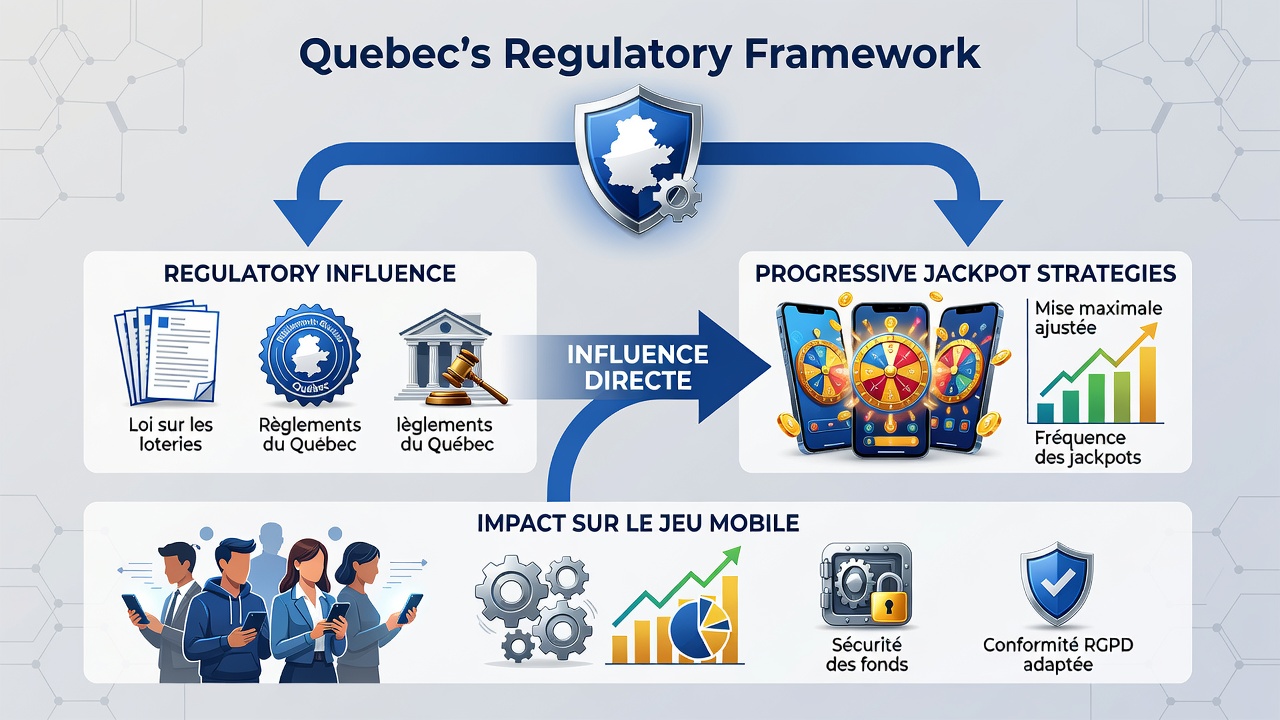
Regulations enforced by Loto-Québec specify that mobile gaming operators must submit detailed technical reports on jackpot mechanics including seed amounts, increment rates, and trigger probabilities, and these requirements force developers to calibrate systems so that mobile interfaces display real-time pool values without exceeding caps tied to local tax and audit protocols. Data from industry filings show that licensed mobile titles operating under this framework often cap international pool participation at levels that keep Quebec-based contributions separate from broader networks, which in turn affects strategy by encouraging segmented jackpot tiers rather than unified global progressives.
Adaptations in Mobile Jackpot Design
Operators respond to these constraints by implementing localized progressive modules that feed into larger pools only after compliance checks clear, and this method allows mobile games to maintain momentum in player engagement while satisfying provincial demands for transparent accounting. Research indicates that contribution rates in Quebec-approved mobile titles frequently sit between 1 and 3 percent of wagers to balance regulatory scrutiny with commercial viability, whereas titles in less restrictive jurisdictions sometimes exceed that range. Those who've studied cross-border operations note that August 2026 marks the scheduled rollout of updated Loto-Québec guidelines requiring enhanced encryption for jackpot transaction logs on mobile devices, a change that will push developers toward more robust server-side architectures to preserve pool integrity during real-time play.
What's interesting is how these rules intersect with responsible gaming mandates because every mobile progressive title must integrate mandatory session limits and self-exclusion tools that pause jackpot contributions automatically once thresholds are reached. Such features reduce the risk of excessive play yet require additional coding layers that influence overall game economics and payout frequency calculations.
Comparative Influences from Broader Canadian and International Standards
Quebec's model shares some procedural overlap with frameworks in other provinces but stands apart in its centralized control which limits multi-jurisdictional jackpot pooling more strictly than arrangements seen in places like Ontario. According to reports from the Responsible Gambling Council, Canadian operators have adjusted mobile strategies by prioritizing standalone progressives that reset frequently within provincial borders to avoid lengthy approval cycles for cross-border links. At the same time data compiled by Australian research bodies such as the Australian Gambling Research Centre highlights parallel trends where localized regulations similarly steer developers away from fully integrated global pools in favor of modular designs.
Those who've examined technical implementations observe that mobile studios now embed configurable jackpot engines capable of toggling contribution logic based on user geolocation, an approach that satisfies Quebec's demand for isolated accounting while permitting seamless play for users outside the province. Evidence suggests this modularity also supports easier updates when new rules take effect, such as the 2026 encryption standards, without requiring full game rebuilds.
Operational and Technical Outcomes
Figures from licensed operator submissions reveal that mobile titles compliant with Quebec rules achieve lower average jackpot hit frequencies compared with unrestricted markets because seed funding and increment caps are calibrated to meet audit thresholds. Developers therefore incorporate secondary bonus features that supplement the main progressive to sustain player interest, and these mechanics often draw from fixed prize pools that fall outside the regulated progressive category. Observers note that testing protocols mandated by Loto-Québec include simulated mobile network conditions to verify that jackpot displays update accurately during connectivity shifts, adding another layer of validation that shapes release timelines.
Conclusion
Quebec's regulatory structure continues to guide progressive jackpot strategies in mobile gaming by enforcing separation of pools, rigorous testing, and integration of responsible play tools, and these elements collectively steer operators toward modular, location-aware systems that prioritize compliance alongside engagement. Updates scheduled for August 2026 will further refine technical requirements around transaction security, prompting continued evolution in how mobile platforms handle pooled rewards. The result is a landscape where regulatory alignment determines both the architecture and the commercial viability of progressive features across the province's licensed mobile environment.